Arabic Alphabet Games for Kids
Arabic alphabet games for kids that make the 28 letters stick. Play Letter Runner, Letter Balloons and more — free, no download, no signup. Made for diaspora families.
⭐ Featured game: Letter Runner
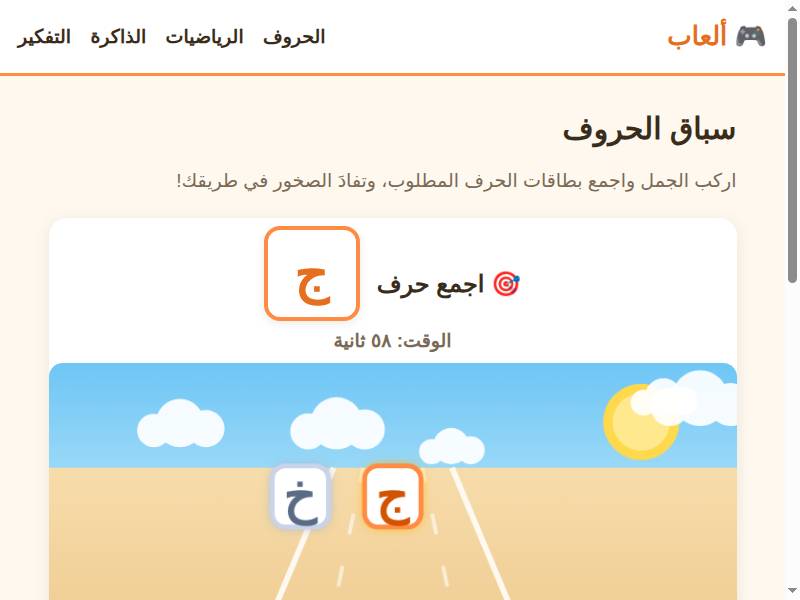
Letter Runner is our most-played alphabet game: your child hears a letter and races to catch it before time runs out. Fast, loud, and weirdly addictive — kids beg for “one more round,” which is exactly how the letters stick.
More games to try
Why the Arabic alphabet is tricky (and why games fix it)
The Arabic alphabet has 28 letters — but that’s not the hard part. The hard part is that most letters wear four different outfits: one shape at the start of a word, another in the middle, another at the end, and a fourth when standing alone. The letter ب looks like four different characters depending on its neighbors. No wonder kids who can sing the alphabet song still freeze when they see letters in a real word.
Charts and flashcards teach letters as static pictures; games teach them as living things. When your child chases a ب through Letter Runner at speed, the brain stops memorizing shapes and starts recognizing patterns — the same skill fluent readers use. That’s the difference between knowing the alphabet and being able to read.
How the games work
Every game follows the same kid-proof formula: hear it, see it, catch it. Your child hears the letter pronounced in clear Arabic, sees it big on screen, then has to find it, pop it, match it, or trace it before the round ends. Rounds last one to two minutes. Mistakes cost nothing — a missed letter just pops back up for another try, with a cheerful encouragement instead of a red X.
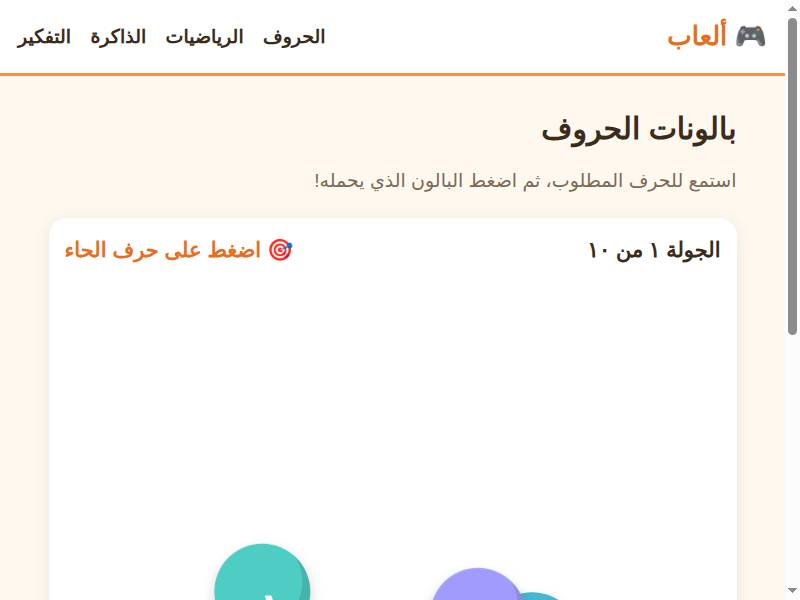
There’s nothing to install and no account to create; open the page in any browser and you’re playing in seconds. Start with Letter Balloons (just tap what you hear), then move to Letter Runner when your child is ready for speed.
What your child actually learns
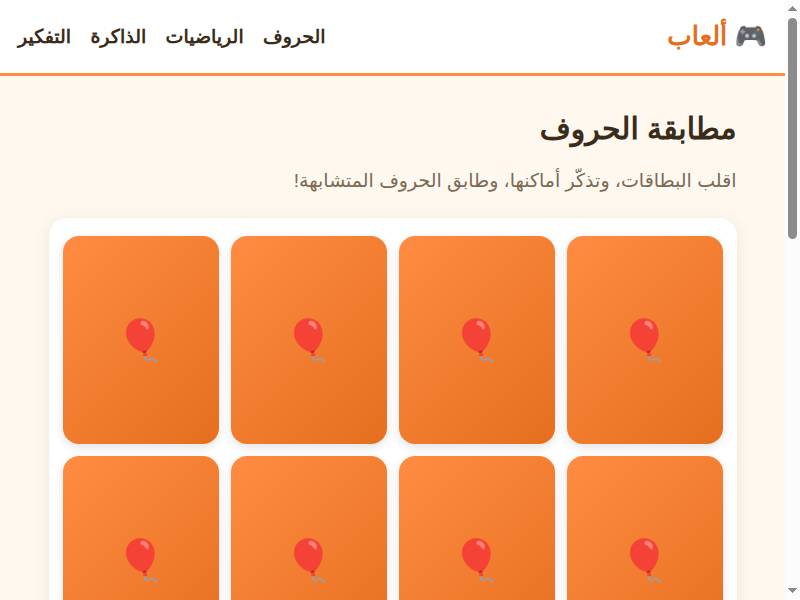
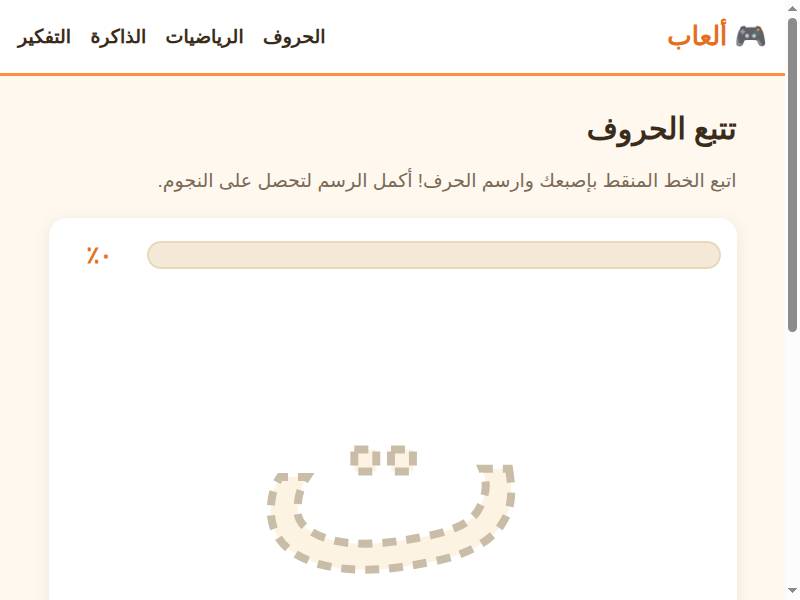
These aren’t generic “educational” games with letters pasted on. Each one targets a specific reading skill: Letter Balloons builds sound-to-shape matching — the foundation of all reading. Letter Runner builds recognition speed, because slow readers aren’t slow thinkers, they’re just slow recognizers. Letter Match trains visual discrimination between lookalikes (ب ت ث and ج ح خ are the classic confusions), and Letter Tracing connects recognition to writing. Together they cover the full path from “I’ve never seen this” to “I know it cold.”
What age is this for?
Ages 3 to 7 is the golden window. Three- and four-year-olds do best starting with Letter Balloons — no reading required, just listening and tapping. Five- to seven-year-olds are ready for Letter Runner and Letter Match, which add time pressure and memory. If your child is older and still shaky on letters, start here anyway; the games don’t talk down, and catching up in private beats struggling in class.
Tips for diaspora parents
First, play alongside your child for the first few sessions and say the letter sounds out loud together — your voice doubles the learning, even if your own Arabic is rusty. Second, keep sessions short: ten minutes while it’s fun beats thirty minutes of groaning. Third, when your child mixes up similar letters, don’t correct — just replay the round. The game is the teacher; you’re the teammate. Fourth, once the letters click, graduate to tracing and then to simple words in our spelling games.
FAQ
Q: How long does it take a child to learn the 28 Arabic letters?
A: With about ten minutes of daily play, most 4- to 6-year-olds recognize all 28 letters within one to two months. The variable part isn’t the count — it’s the shape changes. Games compress this because every round forces dozens of recognitions, where a worksheet forces a handful.
Q: My child knows the alphabet song but can’t point to the letters. Is that normal?
A: Completely normal. Singing the sequence is rote memory; recognizing shapes on sight is a separate skill. Our games train exactly that second skill: hear the sound, spot the shape, under gentle time pressure until it’s automatic.
Q: Should my child learn letter names or letter sounds first?
A: Sounds first, every time. Reading is built on sounds, not names. Every game pronounces each letter as it appears, so your child absorbs the sound-shape connection without any drilling.
Q: We speak a dialect at home. Will Modern Standard Arabic confuse my child?
A: The letter names are the same across dialects and Modern Standard Arabic — a ب is a ب everywhere. The games use clear standard pronunciation for instructions, and they’re visual enough that dialect-speaking families play with zero friction.
🎮 Free to play, no download needed
Play Letter Runner now — free