Arabic Games for Ages 3–5
Arabic games for ages 3–5: tap, listen, pop and color. No reading needed — just ears, eyes and little fingers. Free browser games, no download.
⭐ Featured game: Letter Balloons
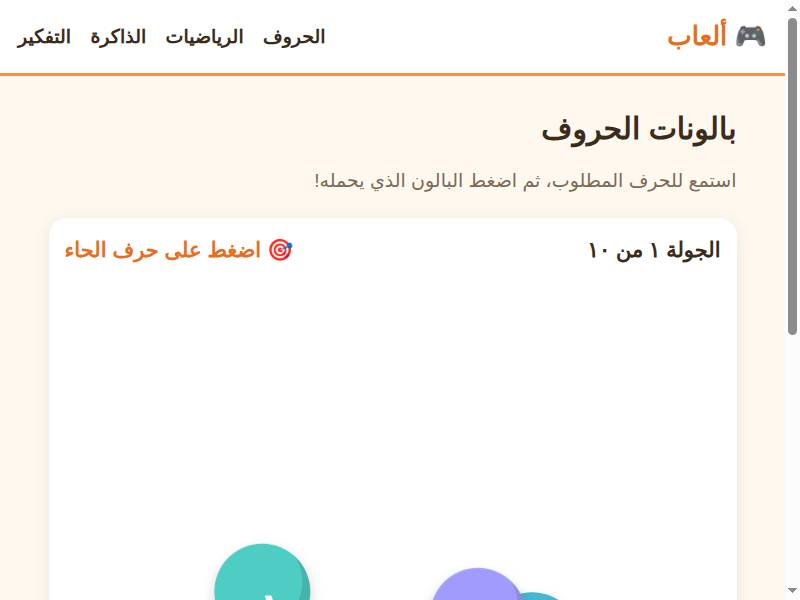
Letter Balloons is the perfect first game: your child hears a letter and pops its balloon. No reading, no failing, just listening, looking, and the pure joy of popping. Most three-year-olds understand it within one round.
More games to try
What a 3- to 5-year-old actually needs
Preschoolers don’t learn from explanations — they learn from doing. A three-year-old won’t sit through a lesson on the letter ب, but will happily pop fifty balloons carrying it, hearing its sound each time. That is the entire design philosophy behind these games: no instructions to read, no failure states, no timers that punish slow fingers.
The games are built for little hands and short attention spans. Targets are big, taps are forgiving, rounds last a minute or two, and every interaction gives an immediate, cheerful response. A child who can’t yet read a single word can play all of these games independently — and learn while doing it.
Listening first: the ear is the gateway
At this age, the ear is ahead of the eye. Your child can distinguish sounds long before they can distinguish written shapes. That is why the best preschool games are listening games: hear a sound, find it, tap it. Letter Balloons trains exactly this — hear the letter, spot the balloon, pop it.
This listening foundation is what makes later reading possible. A child who has heard each letter hundreds of times in play already knows what it sounds like when they meet it on paper. The shape becomes a label for a sound they own, instead of an abstract squiggle to memorize.
Counting, colors, and first numbers
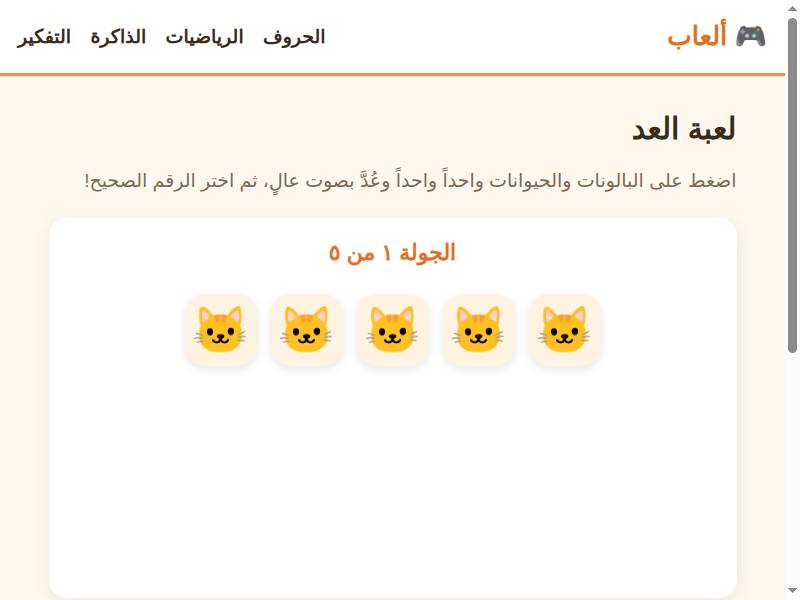
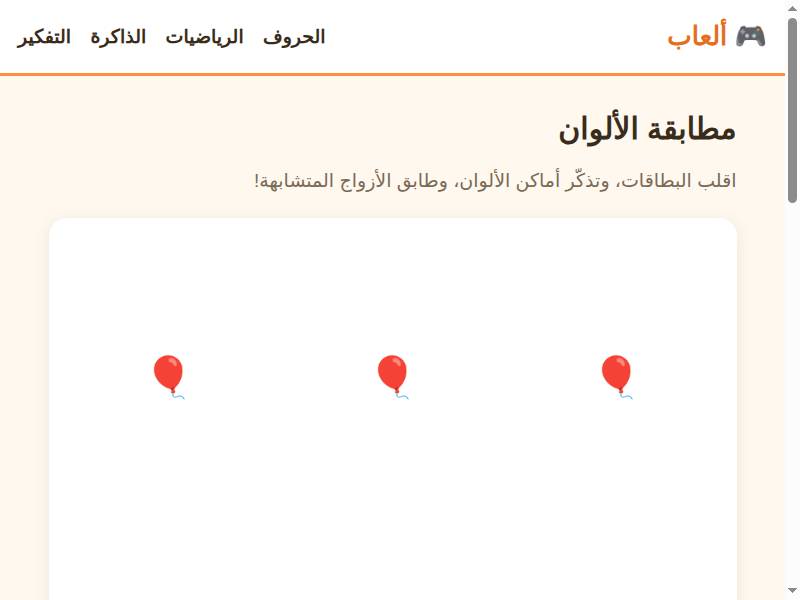
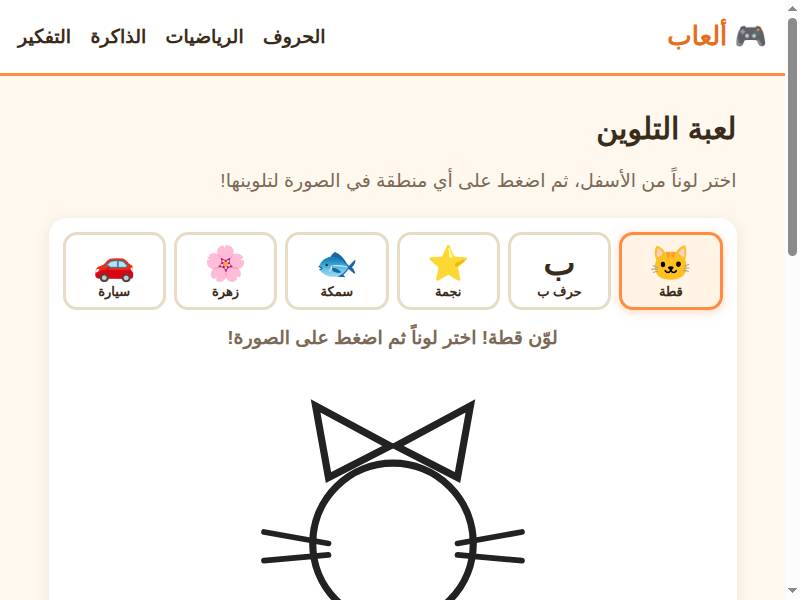
Letters aren’t the only thing preschoolers absorb. Counting teaches one-to-one correspondence — tap each animal once while counting aloud — which is the foundation of all math. Color Match trains visual discrimination and color words. Coloring builds the fine motor control that writing will later need, while letting your child create something of their own.
All of it happens in Arabic: the counting is spoken in Arabic, the colors are named in Arabic, the encouragement is in Arabic. Your child is building two foundations at once — early learning skills and the Arabic language — in the same ten minutes.
How to play with your preschooler
Sit with your child for the first few sessions. Not to teach — to share the delight. Pop a balloon together, count the animals out loud, name the colors as they appear. Your voice is the most powerful teaching tool in the room, even if your own Arabic is rusty: the games give you the correct pronunciation to echo.
Keep sessions short — five to ten minutes is plenty at this age — and always end while it’s still fun. A child who stops because they want more will come back tomorrow; a child who stops because they’re bored may not.
Your voice is the curriculum
At three to five, you are the most important teaching tool in the room — more than any game, app, or book. The games give you the correct Arabic pronunciation to echo, but it is your voice, your delight, and your attention that make the words matter to your child.
Use that power deliberately. When your child pops a balloon, say the letter with them. When they count animals, count along. When they match a color, name it together. These tiny shared moments are the actual lessons; the game is just the stage they happen on.
And don’t worry about your own Arabic. Parents who say ‘I don’t speak Arabic well’ are often the best teachers, because they model something precious: trying. Your child watches you attempt a sound, stumble, laugh, and try again — and learns that Arabic is not a test to pass, but a language to live in.
What not to worry about
Don’t worry if your child taps randomly at first — that’s exploration, not failure. Don’t worry if they can’t sit still — these games work standing up, on a tablet, in the car. Don’t worry about screen time guilt: ten minutes of active, responsive play in Arabic is a different universe from passive video. And don’t worry about ‘falling behind’ — at this age, there is no behind. There is only play, and play is doing its job.
FAQ
Q: Can a 3-year-old really play these games?
A: Yes. The preschool games need no reading, no instructions, and no fine motor precision — just hearing and tapping. Most three-year-olds understand Letter Balloons within a single round played together with a parent.
Q: How much screen time is OK at this age?
A: Short and active: five to ten minutes of responsive play, with a parent nearby, is a sensible daily dose. The games are designed for short bursts — rounds last one to two minutes — so stopping is easy.
Q: My child just taps randomly. Are they learning anything?
A: Yes — random tapping is the exploration phase, and it passes quickly. Even random taps expose your child to Arabic sounds and letters. Within days, you’ll see deliberate choices replace the randomness.
Q: Should I correct my child when they tap the wrong balloon?
A: No — let the game handle it. The games never punish mistakes; the right answer simply comes around again. Correcting turns play into a test. Your job is encouragement, not correction.
🎮 Free to play, no download needed
Play Letter Balloons now — free