Arabic Games for Diaspora Kids
Arabic games for diaspora kids who understand but can’t read: start from sound, build to letters. Free, no download. Made for heritage families in the US, UK, Canada & Australia.
⭐ Featured game: Listen and Pick the Letter
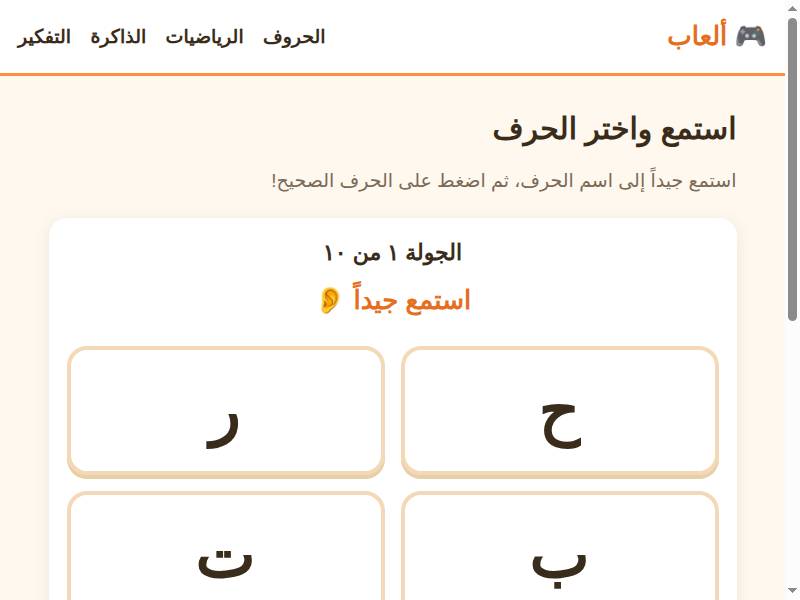
Listen and Pick the Letter starts where heritage kids actually are: strong ears, weak eyes. Your child hears a letter and picks it from a lineup — turning passive understanding into active reading, one sound at a time.
More games to try
The heritage-learner reality
Let’s name the situation millions of families live: your child understands spoken Arabic — instructions, jokes, grandma’s stories — but can’t read a word and answers in English. Linguists call this receptive bilingualism, and it’s the most common pattern in diaspora families. It’s not failure; it’s an unfinished bridge.
The ears work. What’s missing is the sound-to-symbol link, plus the confidence to try. Standard ‘learn Arabic’ resources assume a blank slate and bore heritage kids; ours assume strong listening and build from it. That’s the entire design difference.
Starting from sound, not from zero
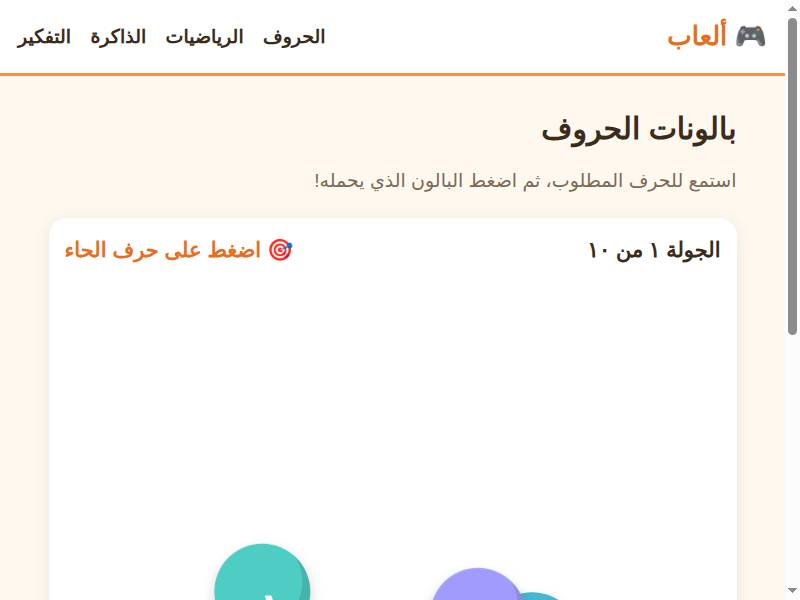
Because your child already hears Arabic, we skip the parts that waste their time. Listen and Pick the Letter plays directly to their strength: hear the sound (easy — they’ve heard it for years), connect it to the shape (the missing link). Letter Balloons does the same with pure joy.
Within weeks, the child who ‘can’t read Arabic’ is recognizing letters — because they were never starting from zero, only from an unconnected skill. Parents consistently report the same moment: the child reads their first word aloud and looks up, stunned.
When your own Arabic is shaky
Here’s what nobody tells you: you don’t need good Arabic to raise a child with good Arabic. You need to create the environment and the routine. The games provide native-quality audio — every letter, every word pronounced correctly — so your pronunciation gaps don’t transfer.
Your role is the ten minutes, the encouragement, the video call with grandma where your child shows off. And here’s the quiet bonus parents don’t expect: playing alongside your child rebuilds your own Arabic. The kitchen-level speaker becomes the homework helper within months.
Why it matters (beyond nostalgia)
This isn’t just about heritage, though heritage alone would be enough. Bilingual children show stronger executive function, better task-switching, and measurable advantages in attention. Arabic specifically opens a major world language — 400+ million speakers — plus a direct line to family, faith, and identity.
And practically: the child who reads Arabic can text their grandparents, follow Arabic media, and one day navigate the Arab world. You’re not teaching a subject; you’re handing them a second world.
Making it stick as they grow
The dropout risk peaks around age 8–10, when English school life dominates. Three defenses: first, make Arabic social — cousins, grandparents on video, Arabic-speaking friends. Language follows relationships. Second, follow interests — football commentary, cartoons, gaming videos in Arabic beat any lesson. Third, keep the games in the rotation as the low-effort daily habit; ten minutes of play maintains what weekends of study can’t. The goal isn’t perfection — it’s that Arabic remains a living part of life, not a childhood phase.
FAQ
Q: My child understands Arabic but refuses to speak it. Is that normal?
A: Completely normal — it’s called receptive bilingualism, and it’s the most common heritage pattern. Understanding develops years before speaking confidence. Don’t force output; keep input rich (games, stories, family calls) and celebrate every attempt. Speaking emerges when the child feels safe, not when they’re pressured.
Q: I feel guilty that my Arabic isn’t good enough to teach my kids.
A: Release the guilt — it’s the single most common feeling among diaspora parents, and it’s misplaced. Your job isn’t to be the teacher; it’s to be the environment-setter. The games handle pronunciation and structure. You handle routine and love. Parents with ‘bad’ Arabic raise fluent kids this way every day.
Q: Will learning Arabic hurt my child’s English at school?
A: No — decades of research show the opposite. Bilingual children develop stronger executive function and metalinguistic awareness, which transfer to all learning, including English literacy. The children who struggle aren’t the bilingual ones; they’re the ones with too little support in either language.
Q: How do we keep Arabic alive once school and friends take over?
A: Make it social and make it easy. Social: grandparents on video, Arabic-speaking cousins, media they actually enjoy. Easy: ten minutes of games daily as a non-negotiable micro-habit. The families who keep it aren’t the strictest — they’re the ones who made Arabic part of fun, not part of homework.
🎮 Free to play, no download needed
Play Listen and Pick the Letter now — free