Arabic Math Games for Kids
Arabic math games for kids: count animals aloud in Arabic, solve ٣+٤, race the clock. Free browser games, no download. Math practice that secretly teaches Arabic.
⭐ Featured game: Counting
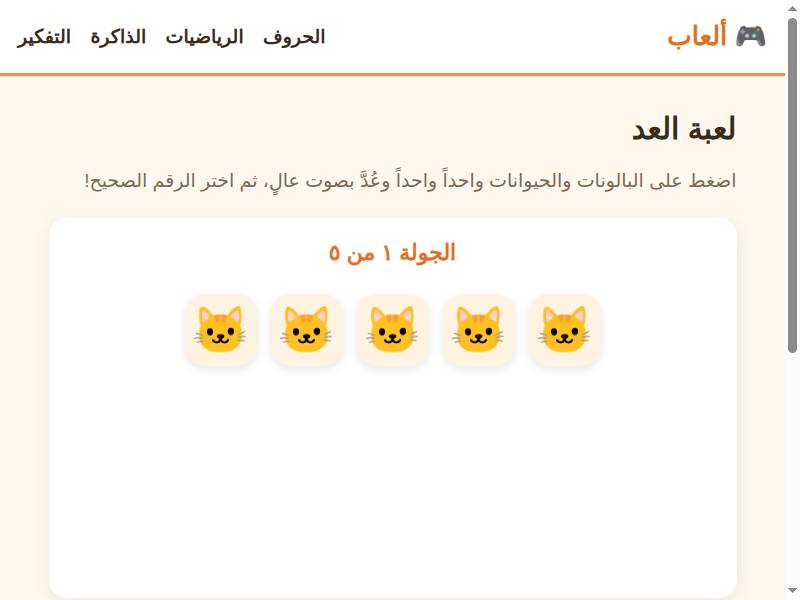
Counting is where little ones start: tap each animal as you count aloud in Arabic — ‘واحد، اثنان، ثلاثة’ — then pick the right number. It’s the first math skill and the first Arabic skill, taught together.
More games to try
Why math in Arabic (not just math)
Most diaspora kids can count to twenty in English years before they can do it in Arabic — and parents often don’t notice until a grandparent asks and the child freezes. Numbers are also most children’s first encounter with Arabic-Indic numerals (١٢٣٤٥٦٧٨٩), which look nothing like 123.
Our math games teach both at once: the quantity and the language. Your child isn’t just learning that 3+4=7 — they’re learning that it’s ثلاثة زائد أربعة يساوي سبعة, and that ٧ is how you write it. One activity, two skills, zero extra time.
How the games work
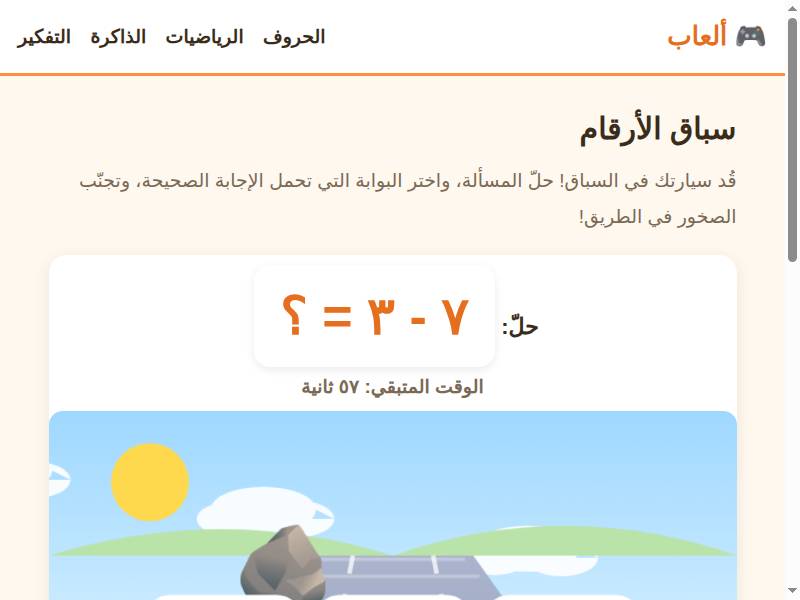
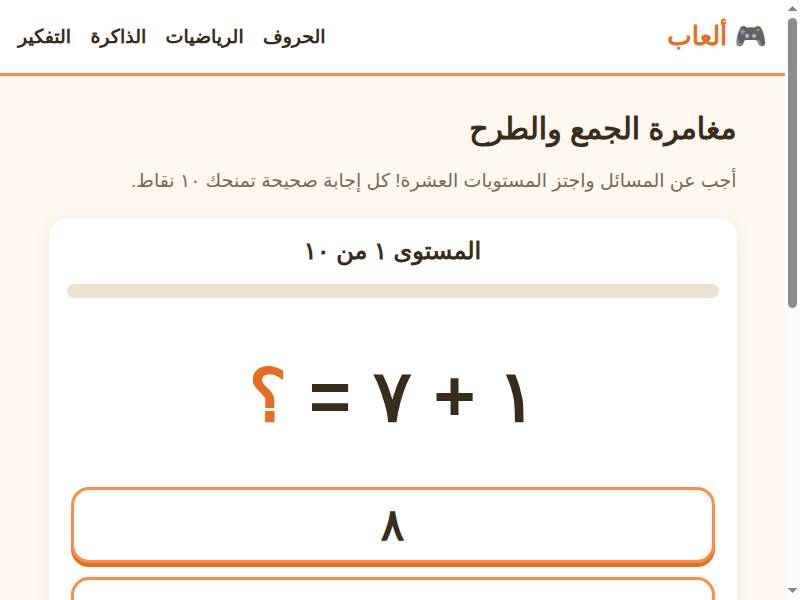
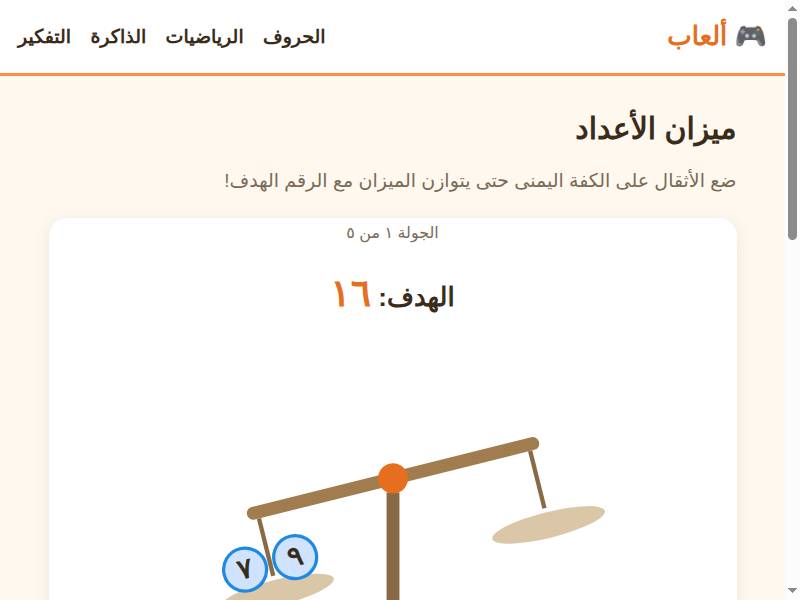
Open in any browser — no download, no account. Little ones start with Counting: tap each animal while counting aloud, then choose the matching numeral. Older kids graduate to Math Quest (addition and subtraction adventures), Balance Math (equations as a seesaw), and Number Runner (catch the right numeral at speed). Every number is spoken in Arabic and written in Arabic-Indic numerals, so ears and eyes learn together.
What your child learns
The full early-math path, in Arabic: one-to-one correspondence (touching each object once while counting), numeral recognition (matching ٧ to ‘seven’), basic operations (addition, subtraction, and beyond), and number sense (which is bigger, what comes next). Because the language of instruction is Arabic, math time doubles as Arabic immersion — the rare screen time you don’t have to feel guilty about.
What age is this for?
Ages 3 to 10, tiered by game. Three- to six-year-olds: Counting and Shape Sort — the foundations. Five- to eight-year-olds: Number Merge, Whack-a-Mole numbers, Clock Game. Six and up: Math Quest, Balance Math, Multiplication. Follow your child’s math level, not their age; the Arabic will follow the math.
Tips for parents
Count in Arabic during daily life — stairs, grapes, socks. It takes ten seconds and normalizes the language. When your child hesitates on a numeral, don’t translate to English; point at objects and count together in Arabic. And let them hear you stumble: if your own Arabic numbers are rusty, practice aloud with them. Kids learn courage from watching you try.
FAQ
Q: Why do the numbers look different — what is ١٢٣?
A: Those are Arabic-Indic numerals, the standard way numbers are written across the Arab world — on price tags, clocks, and in schoolbooks. They map to 1234567890 one-to-one. Kids pick them up in days once they see them in games; it’s just a new symbol set, like learning that V means 5.
Q: My child already does math in English at school. Is Arabic math necessary?
A: For school, no. For the language, absolutely — numbers are among the most-used words in any language, and not knowing them cuts your child off from prices, times, phone numbers, and everyday conversation with Arabic-speaking family. It’s also the easiest Arabic to learn, because math is universal.
Q: Won’t learning math in two languages confuse my child?
A: Research says the opposite: bilingual math learners develop stronger number sense, because they’re forced to understand the concept rather than memorize the procedure. If your child can do it in English, the Arabic version comes quickly — the math is already there.
Q: What age should kids start counting in Arabic?
A: As early as they’re counting in anything — age 2–3. Counting is rhythmic and musical at that age, which makes it the perfect first Arabic. Our Counting game is designed for exactly this: tap, say it aloud, repeat.
🎮 Free to play, no download needed
Play Counting now — free