Arabic Number Games for Kids
Arabic number games for kids: learn Arabic-Indic numerals (١٢٣) and counting through fast, free browser games. No download, no signup. Ages 3–9.
⭐ Featured game: Number Runner
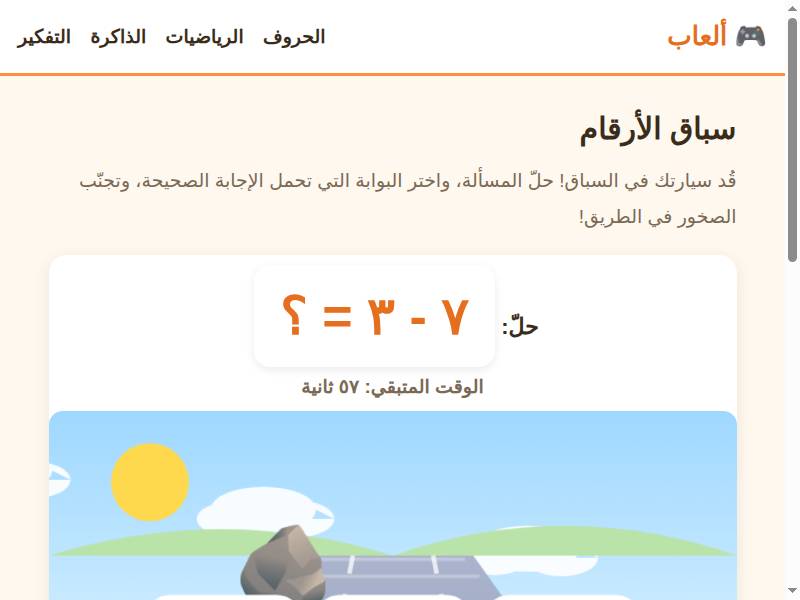
Number Runner is digits at full sprint: catch the right numeral before time runs out. It’s the fastest way we know to make ٠١٢٣٤٥٦٧٨٩ as familiar as 0123456789.
More games to try
The numeral gap nobody warns you about
Arabic doesn’t just have its own letters — it has its own digits: ٠١٢٣٤٥٦٧٨٩, used on price tags, clocks, and in schoolbooks across the Arab world. Diaspora kids who read English digits fluently often can’t read a phone number or a price in Arabic. It’s a small skill with outsized consequences: it determines whether your child can function in an Arabic environment or needs everything translated.
The good news: numerals are far easier than letters — ten symbols, no shape changes, learned in days with the right games.
How the games work
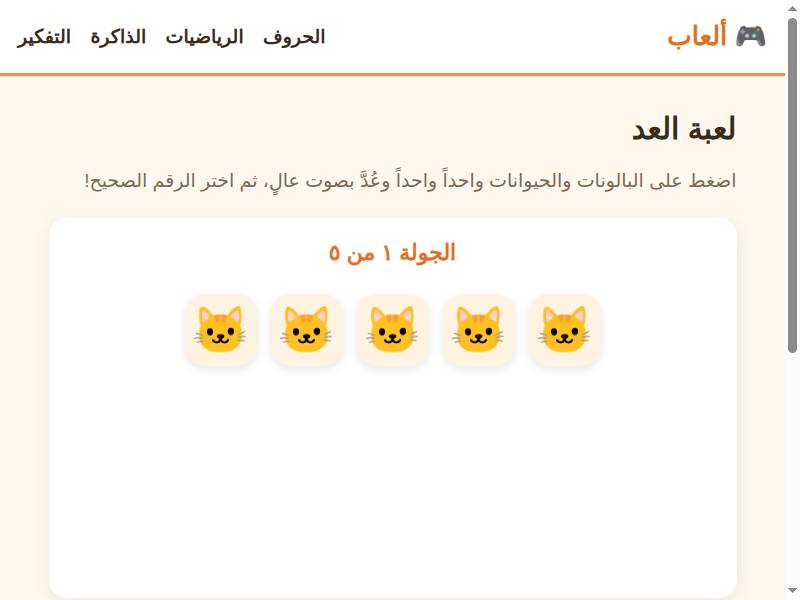
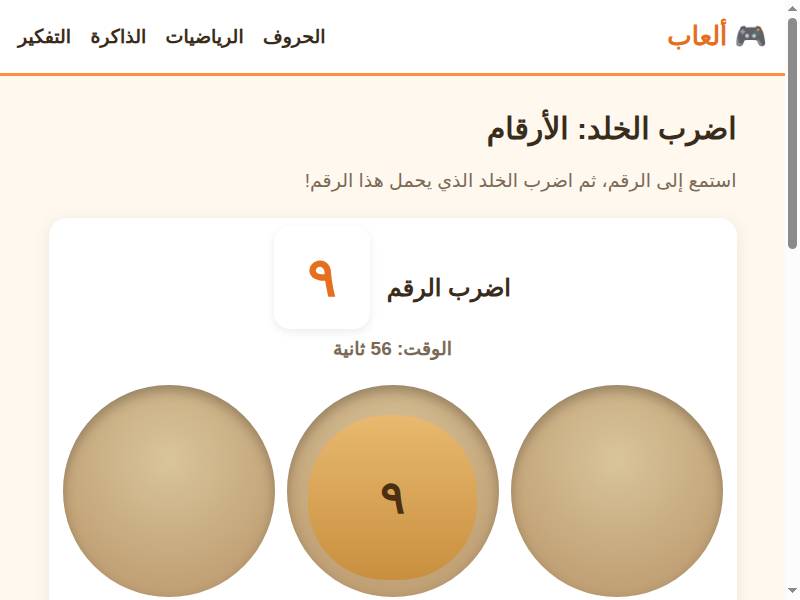
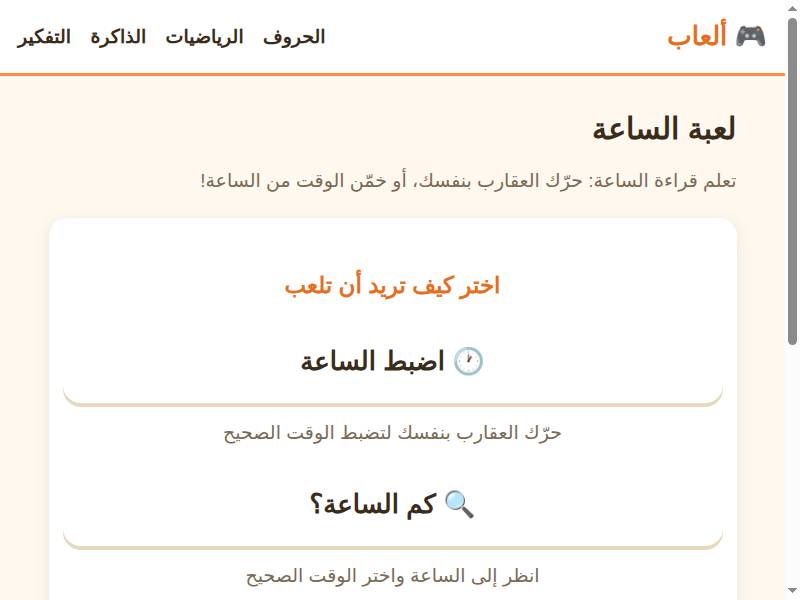
Open in any browser — no download, no account. Little ones start with Counting: tap each animal while counting aloud in Arabic, then pick the matching numeral — quantity, spoken word, and symbol learned as one unit. Older kids take on Number Runner (catch the numeral you hear at speed), Whack-a-Mole numbers, and the Clock Game (telling time in Arabic). Every numeral is spoken aloud and shown large, so the symbol-sound link forms fast.
From numerals to real math
Recognizing ٧ is step one; using it is step two. That’s why the number games connect directly to our math games: once numerals click, Math Quest and Balance Math put them to work in addition, subtraction, and equations — all in Arabic. The progression is deliberate: symbols first (days), then operations (weeks). A child who can read ٤٥٦ and compute with it has something most diaspora kids lack: functional numeracy in Arabic.
What age is this for?
Ages 3 to 9. Three- to five-year-olds: Counting — one-to-one correspondence and numeral recognition through tapping. Six- to nine-year-olds: Number Runner and Whack-a-Mole for speed, Clock Game for real-world application. If your child is older and still guesses at ٢ vs ٣, start with Number Runner regardless of age — it’s designed to fix exactly that.
Tips for parents
Point out Arabic numerals in real life — they’re everywhere once you look: on packaging, in videos, on prayer timetables. Ask your child to read them aloud; real-world reading cements game learning. Count things together in Arabic (stairs, snacks, red cars) — ten seconds, zero prep. And when they confuse lookalikes (٢/٣, ٦/٩), don’t explain — play another round. The games are the explanation.
FAQ
Q: Why are Arabic numbers different from regular numbers?
A: They’re called Arabic-Indic numerals (٠١٢٣٤٥٦٧٨٩), and they’re the standard digits across the Arab world — on money, clocks, and in schools. The ‘regular’ 123 digits actually originated from the same system centuries ago. Kids learn the mapping in days; it’s just ten new symbols.
Q: Should my child learn 123 or ١٢٣ first?
A: Whichever their school uses for math — usually 123. Then add ١٢٣ as a second symbol set through games. Bilingual kids handle two symbol sets easily (they already handle two languages). The key is not mixing the teaching: learn one solidly, then map the other.
Q: My child keeps mixing up ٢ and ٣. Any trick?
A: The classic pair — they differ only in teeth count. Don’t lecture; play Number Runner, which forces dozens of split-second ٢-vs-٣ decisions per round. The brain learns the distinction from discrimination practice, not from being told.
Q: Do these games teach math, or just the numerals?
A: Both, in sequence. Counting and Number Runner teach the symbols; Math Quest, Balance Math, and our other math games teach operations using those symbols — all in Arabic. Symbols first, then arithmetic.
🎮 Free to play, no download needed
Play Number Runner now — free