Arabic Phonics Games for Kids
Arabic phonics games for kids that build the sound-to-letter connection: hear a sound, find its letter, say it out loud. Free browser games, no download. Ages 3–8.
⭐ Featured game: Listen and Point
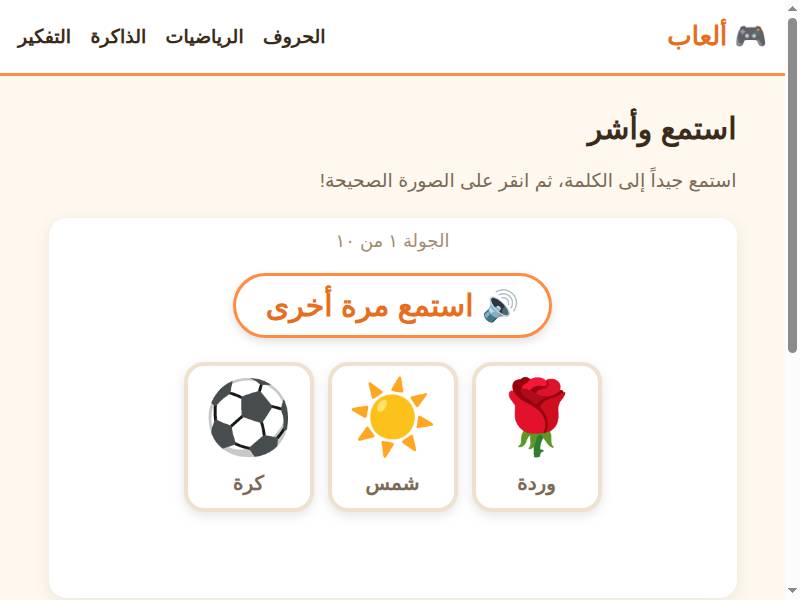
Listen and Point is pure phonics: your child hears a sound — say, the letter ع — and must point to the right letter among lookalikes. No reading required, no wrong answers punished. It trains the exact skill that makes everything else possible: hearing Arabic sounds clearly.
More games to try
Why phonics comes before the alphabet
Most parents start by showing children the alphabet chart. That skips the step that matters most: the ear. A child who cannot hear the difference between ح and هـ, or between س and ص, will guess at letters no matter how many flashcards you show. Phonics games flip the order — sound first, symbol second — so that by the time your child meets a letter on screen, their ear already knows what it should sound like.
Arabic is especially unforgiving here. Several letter pairs differ only in where the sound is made in the throat, and the short vowels (َ ُ ِ) change a word’s meaning entirely. A child who learns to hear these distinctions early reads with far less struggle later. The games make this training feel like play: listen, point, tap, repeat — dozens of sound discriminations per minute, with zero boredom.
How the games work
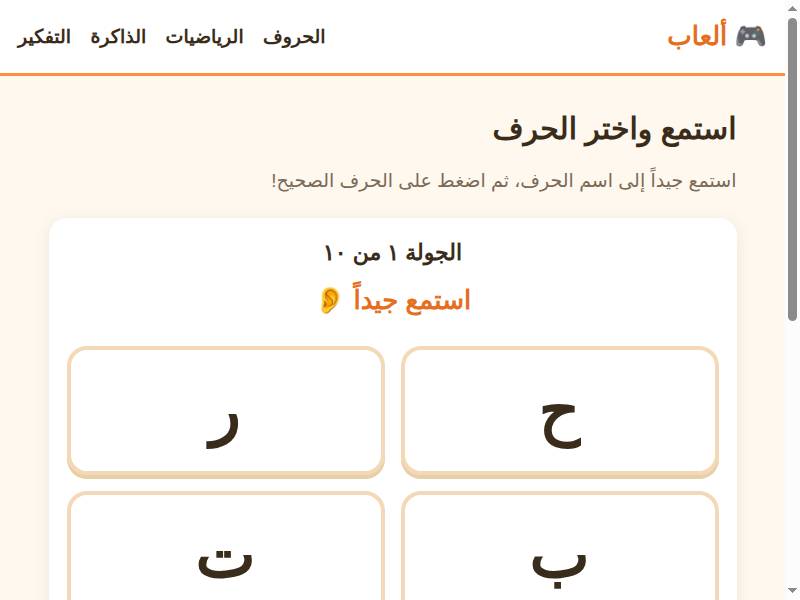
Every phonics game follows the same loop: hear it, find it, say it. Your child hears a clear Arabic pronunciation, then must find the matching letter, sound, or word among several options. In Listen and Point, the task is pure listening — no reading needed at all, which makes it the perfect starting game for ages three and up. In Listen and Pick the Letter, the lineup gets tighter: lookalikes sit side by side, forcing the ear to sharpen.
Rounds last one to two minutes, mistakes cost nothing, and every correct answer is spoken aloud again, so the sound gets reinforced twice per round. Open any game in the browser — no download, no account — and your child is training their ear within seconds. Parents are often surprised how quickly children start noticing sound differences in everyday speech once they play regularly.
The tricky sounds: sun and moon letters
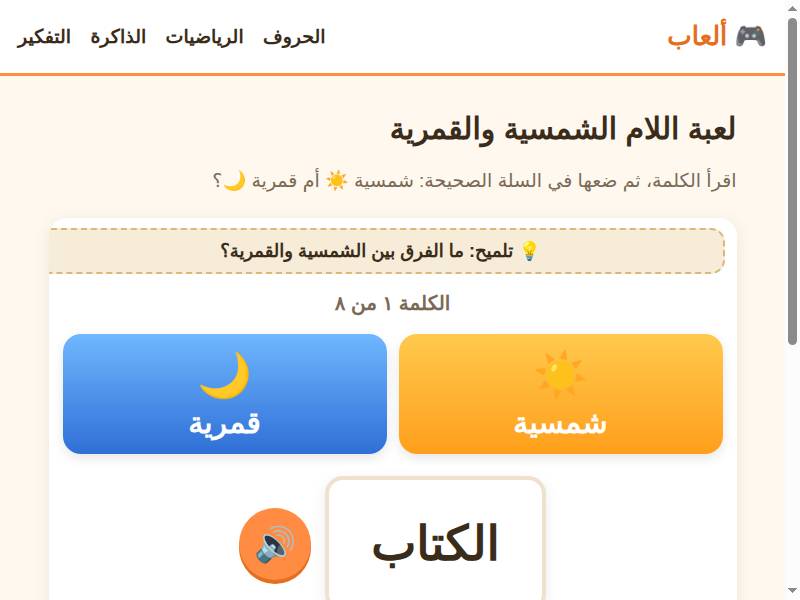
Every Arabic learner eventually meets the famous pair: ال الشمسية وال القمرية — the sun letters and the moon letters. The rule is simple to state and hard to feel: with sun letters, the ل of ال disappears into the following sound (الشمس is pronounced ‘ash-shams’), while with moon letters it stays (القمر is ‘al-qamar’). Children who only memorize the rule keep hesitating; children who have heard the pattern hundreds of times in games feel it automatically.
Our Sun & Moon Letters game turns this exact rule into play: hear the word, decide whether the ل stays or melts away. After enough rounds, your child stops thinking about the rule — they just hear it, the way native speakers do.
From sounds to words
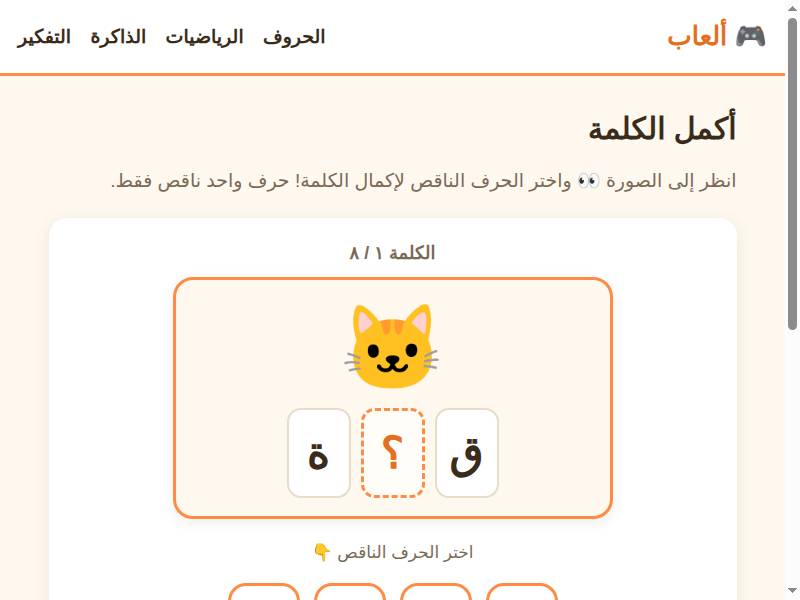
Phonics is not the destination; it is the on-ramp. Once your child can hear sounds and match them to letters, the next step is blending: putting sounds together to form words. That is where Complete the Word comes in — your child hears a word, sees it with one letter missing, and must supply the missing sound. It is the first moment reading feels real, and it arrives much sooner than parents expect when the phonics foundation is solid.
The progression is deliberate: listening games first, then letter matching, then word building. Skip the listening step and word games feel like guessing; build it first and words click into place, because your child is assembling sounds they already know.
Tips for parents
First, say the sounds out loud together. Your voice doubles the learning — even if your own Arabic is rusty, the games give you the correct pronunciation to copy. Second, keep sessions short: ten minutes of focused listening beats thirty minutes of half-attention. Third, when your child confuses two sounds, don’t correct — just replay the round. The game is the teacher; you are the teammate. Fourth, celebrate listening wins out loud: ‘You heard the difference!’ teaches your child that ears matter as much as eyes.
FAQ
Q: What is Arabic phonics, exactly?
A: Phonics is the connection between sounds and letters: hearing a sound and knowing which letter makes it. In Arabic that means distinguishing sounds like ح from هـ, س from ص, and short vowels from long ones — then matching each sound to its written letter.
Q: My child already knows the alphabet song. Do they still need phonics games?
A: Yes — singing the sequence is memory, not phonics. Phonics is hearing a single sound and recognizing its letter on sight. Many children who can recite the alphabet still cannot do that, and phonics games train exactly the missing skill.
Q: What are sun and moon letters?
A: They describe what happens to the ل in ال before different letters. Before sun letters (like ش), the ل blends into the next sound: الشمس sounds like ‘ash-shams’. Before moon letters (like ق), the ل stays: القمر is ‘al-qamar’. Our Sun & Moon Letters game trains this by ear.
Q: How long before my child can read simple words?
A: With daily ten-minute phonics sessions, most 4- to 6-year-olds move from sounds to simple words within a few weeks. The key variable is consistency: short daily play builds the ear faster than occasional long sessions.
🎮 Free to play, no download needed
Play Listen and Point now — free