Arabic Summer Games for Kids
Arabic summer games for kids: keep Arabic alive over the long break with ten minutes of daily play. No worksheets, no battles — just games. Free, no download.
⭐ Featured game: Word Puzzle
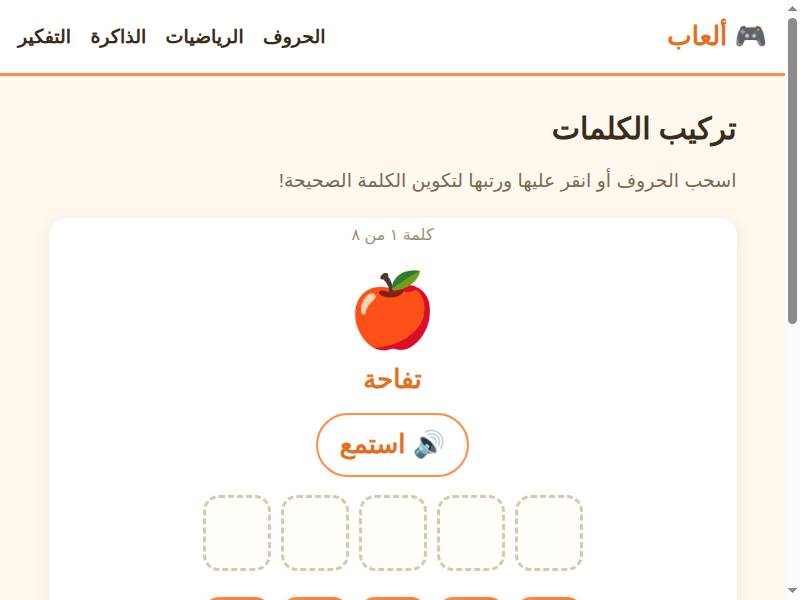
Word Puzzle is the summer staple: build words from letters, beat your own best score, and feel your vocabulary growing. It is the kind of game children choose on their own — which is exactly what summer needs.
More games to try
The summer slide is real
Teachers know it well: children return in September having lost weeks of progress. For Arabic, the slide is worse, because school is often the only place the language lives. Two months of English-only summer, and the letters blur, the vocabulary fades, the confidence evaporates.
The fix is not summer school. It is a tiny daily habit — ten minutes of Arabic play, every day, all summer. Small enough to survive holidays, travel, and bad moods. Consistent enough to hold the line — and often to advance it, because summer play has no pressure.
The ten-minute summer habit
Here is the whole system: one game session a day, ten minutes, same time each day — after breakfast works well. Let your child choose the game. That is it. No worksheets, no lessons, no battles. The games are designed for exactly this rhythm: short rounds, instant feedback, clear stopping points.
Track it with a calendar and stickers, not with tests. A chain of X’s across July and August is weirdly motivating for children — and the streak itself becomes the reason to keep going.
Travel-friendly: play anywhere
Summer means travel — and travel is where most learning routines die. These games are built for the road: they run in any browser, on any device, and once installed from the install guide, they work offline. Planes, cars, grandparents’ houses — the habit travels with the phone.
One more travel tip: download nothing in advance except the installed site. The games need no logins, no updates, and no storage beyond the initial install — so a borrowed tablet, a hotel computer, or a cousin’s phone all work the same way.
Pack the habit, not the homework. A tablet with the games installed beats a suitcase of workbooks, because the games get played and the workbooks don’t.
Mix it up: a weekly rotation
Variety keeps the habit alive. A rotation that works: Monday letters, Tuesday words, Wednesday math, Thursday memory, Friday free choice, weekend stories. Each day targets a different skill, so the summer covers the whole landscape without ever feeling like a curriculum.
Let Fridays be sacred: free choice means your child picks whatever they love, which keeps the whole week feeling like play rather than obligation.
September will thank you
Children who play through the summer return to school with their Arabic intact — and often stronger, because they practiced without pressure. The September teacher sees a child who remembers the letters, the words, the numbers. The child sees a subject they didn’t lose.
And the best part? Your child will not feel like they studied all summer. They played — and the playing did the teaching.
Start today, not next Monday. One game session. Ten minutes. The summer is long, but the habit is small — and small is what survives.
A sample summer week, day by day
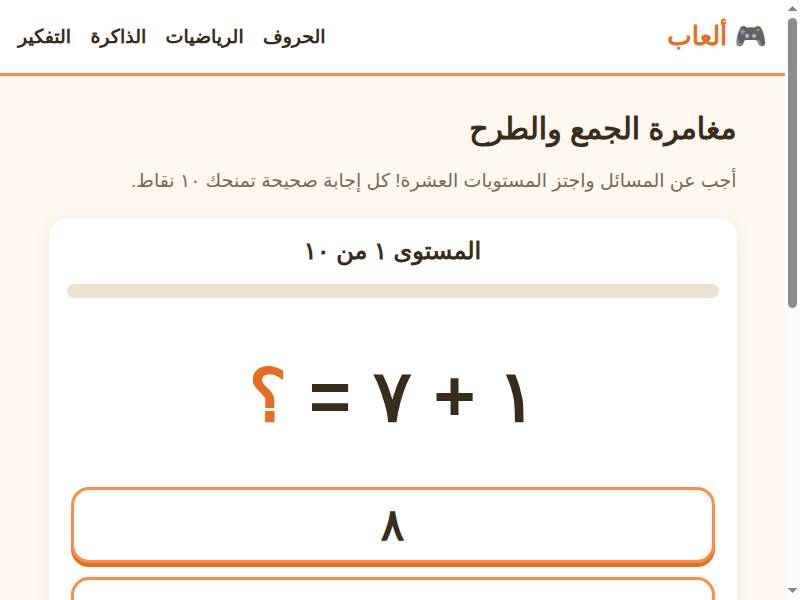
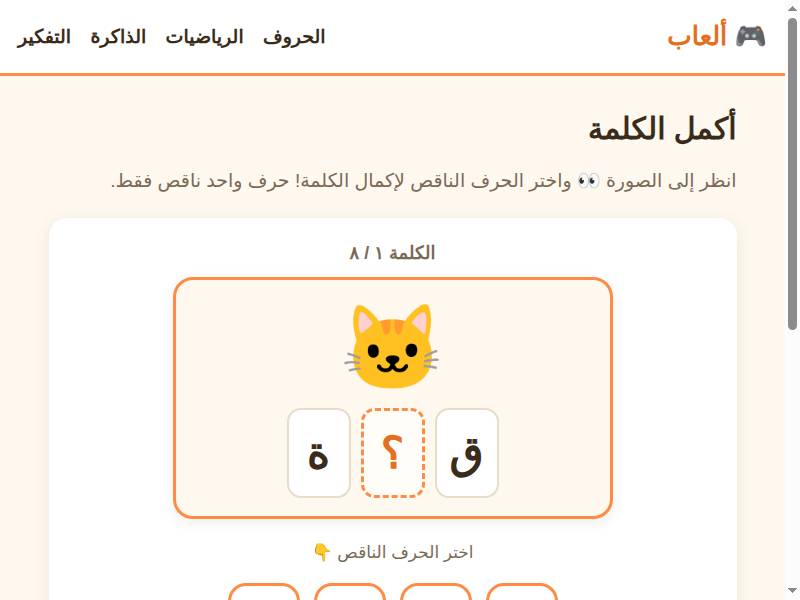
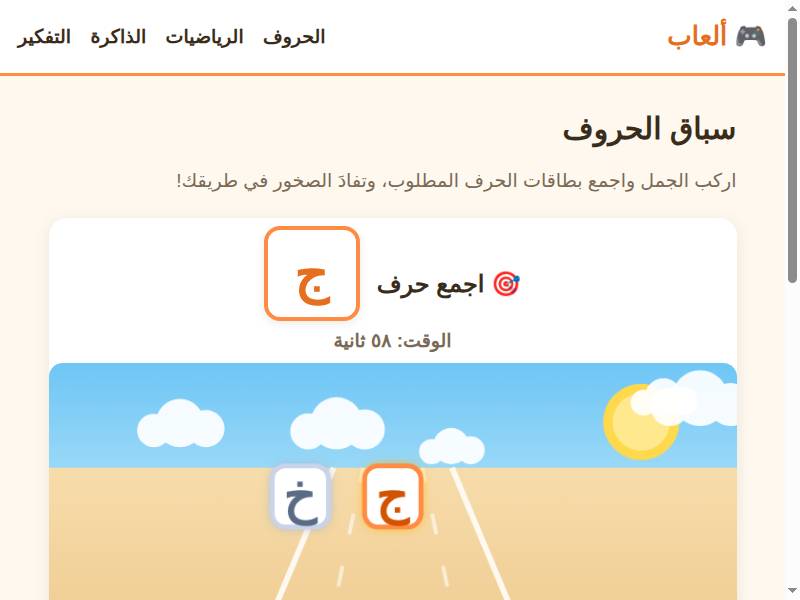
Monday: letters — Letter Runner or Letter Balloons, ten minutes after breakfast. Tuesday: words — Word Memory or Word Puzzle, matching words to pictures. Wednesday: math — Math Quest or Counting, operations in Arabic. Thursday: memory — Word Memory or Spot the Difference, focus training. Friday: free choice — whatever your child loves, no questions asked. Saturday: stories — one Interactive Story together, retold in your child’s own words. Sunday: rest — or a bonus round if they ask for one.
That is the whole summer curriculum: six days of play, one day of rest, ten minutes a day. No worksheets, no battles, no summer school. By September, your child will have played more than sixty sessions — and the teacher will see the difference.
One last tip: let your child own the calendar. Stickers, checkmarks, a paper chain — whatever makes the streak visible and theirs. The habit that a child owns is the habit that survives August.
FAQ
Q: Will ten minutes a day really prevent the summer slide?
A: Yes — the slide comes from zero contact, not from insufficient study. Ten minutes of daily play keeps the language active: letters stay familiar, words stay accessible, confidence stays intact. The research on learning loss is consistent on this: a little, daily, beats a lot, occasionally.
Q: My child resists anything that feels like school in summer. What do I do?
A: Don’t call it learning. Let them choose the game, keep it to ten minutes, and never test them on it. The games are designed to feel like games — because they are.
Q: We’re traveling with no internet. Can we still play?
A: Yes. Install the site as an app from the install guide over Wi-Fi before you travel, and the games work offline. Set it up once and the habit travels.
Q: What if we miss a day?
A: Nothing happens. The habit is the goal, not the streak — miss a day, play the next. The only real failure mode is quitting entirely, and a forgiving routine is the one that survives.
🎮 Free to play, no download needed
Play Word Puzzle now — free