Arabic Vocabulary Games for Kids
Arabic vocabulary games for kids: match words to pictures, hear every word pronounced, build a real word bank. Free browser games, no download. Ages 3–9.
⭐ Featured game: Word Memory
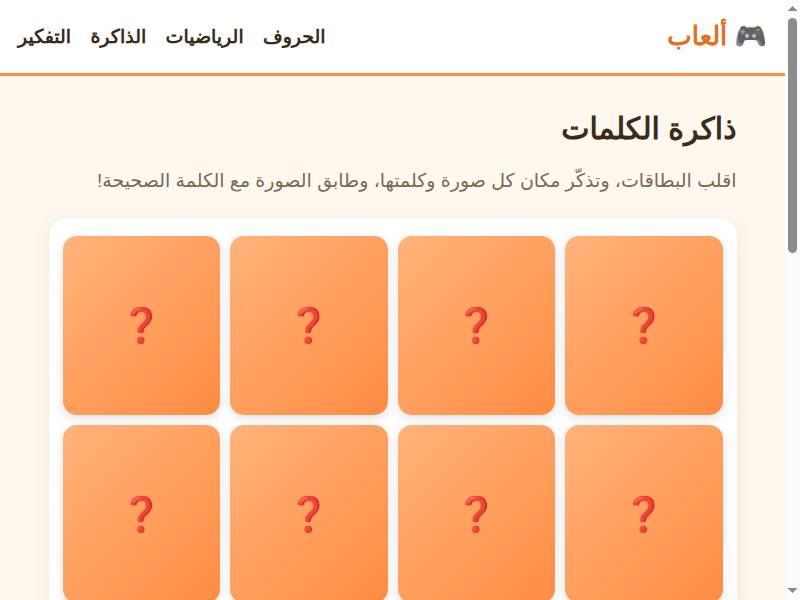
Word Memory is the classic flip-and-match game, rebuilt for Arabic: match each word to its picture, and every match pronounces the word aloud. Five minutes a day, and your child’s word bank grows without a single flashcard.
More games to try
Why vocabulary beats grammar at this age
Parents often worry about grammar — verb forms, cases, sentence structure. For young children, that worry is misplaced. The single best predictor of a child’s progress in a language is vocabulary size: how many words they actually know. Grammar arrives later, and it arrives on top of words, not instead of them.
That is good news, because vocabulary is the most game-friendly skill there is. A word paired with a picture and a sound, met a dozen times in play, sticks far better than the same word drilled from a list. The games are built around exactly that loop: see the picture, hear the word, match it, repeat.
How the games build words
Every vocabulary game uses the same three channels at once: the picture (meaning), the written word (spelling), and the spoken word (pronunciation). In Word Memory, matching a card pair delivers all three together — the moment of the match is the moment the word gets filed in memory.
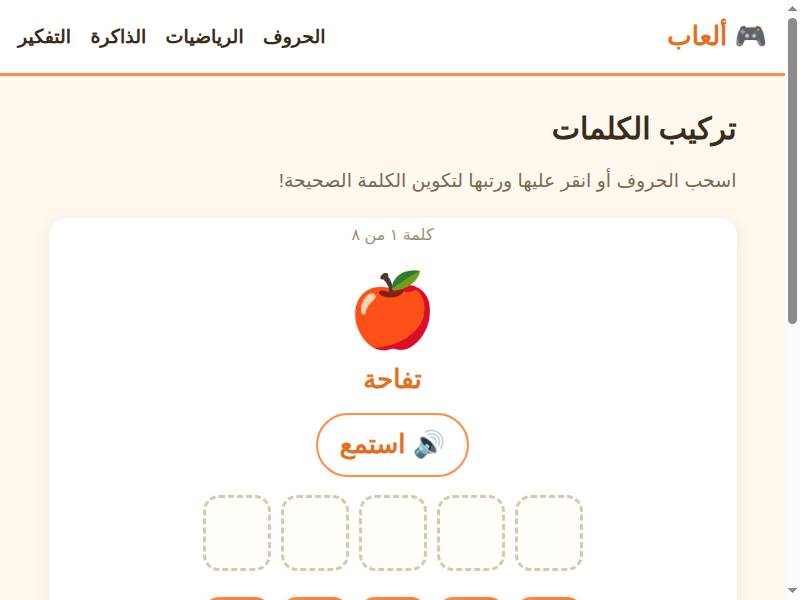
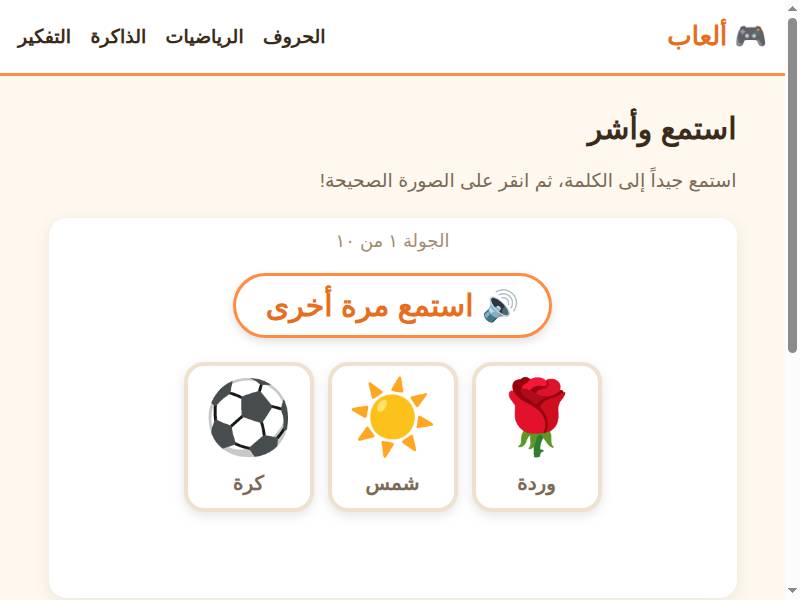
Word Puzzle adds a second layer: arranging letters to build a word, which forces your child to think about the word’s internal structure. Listen and Point works in reverse — hear the word, find the picture — which trains comprehension, the skill that matters most for understanding stories and family conversation.
Which words come first
The games focus on the words children need first: everyday concrete nouns — animals, foods, body parts, household objects — and the action words of daily life. These are the words that appear in stories, in family talk, and in the classroom, which means every word learned gets reinforced outside the game.
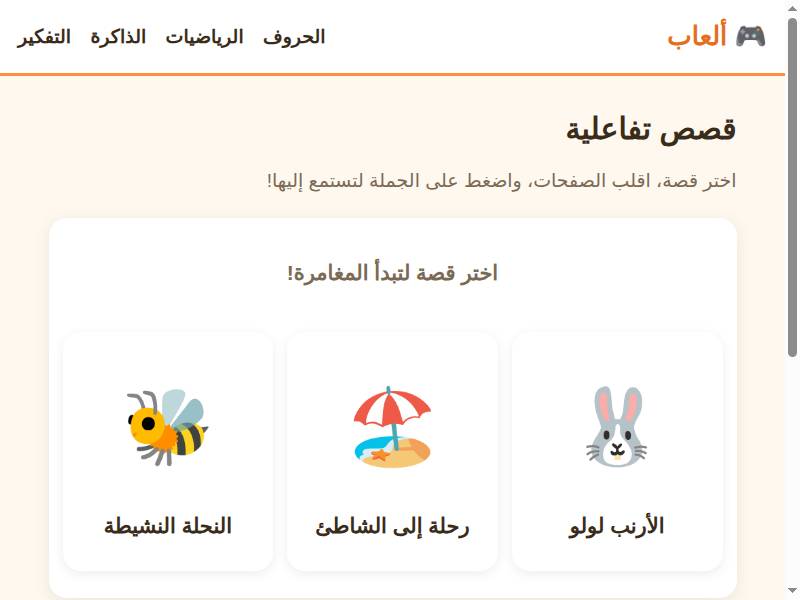
Abstract words come later, through stories. Interactive Stories introduces vocabulary in context — a word inside a sentence inside a tale — which is how children learn the words that can’t be pictured, like ‘because’ or ‘tomorrow.’
From words to sentences
Vocabulary games are the foundation; sentences are the house. Once your child knows a few dozen words, the word games start connecting: Complete the Word asks for the missing word in a phrase, and the story games ask your child to follow a whole narrative. That transition — from single words to connected meaning — is the moment Arabic stops being a subject and starts being a language.
You can help at home by using the game words in real life: name the breakfast foods in Arabic, count the animals on a walk, ask for the colors of passing cars. Every real-world use doubles the value of the game session.
Tips for parents
First, say the words aloud together when they match — your voice doubles the gain. Second, replay the same game over several days rather than hopping between games; vocabulary grows through repeated encounters with the same words. Third, don’t test — play. Asking ‘what does this mean?’ turns a game into an exam; letting the game do the teaching keeps it fun. Fourth, celebrate when your child uses a game word outside the game — that transfer is the whole point.
Keeping words alive after the game
Games plant words; real life grows them. The most powerful thing you can do after a session is use the game’s words in ordinary moments: name the breakfast foods in Arabic, count the animals on a walk, ask for the colors of passing cars. Each real-world encounter strengthens the memory the game created, and children love showing off words they know — it makes them feel competent in the language.
A second trick is the word wall: write newly learned words on cards and stick them on the fridge or bedroom door. Seeing the words every day, outside the game, turns them from game vocabulary into household vocabulary. Rotate the cards weekly, retire the ones your child uses naturally, and add new ones from the latest games.
Finally, connect words to people. A word your child uses with grandma on a video call is a word that will never be forgotten — because it now carries a relationship, not just a definition. Language lives in relationships, and every word with a person attached to it sticks far harder.
FAQ
Q: How many Arabic words does my child need?
A: For everyday conversation, a few hundred well-chosen words carry a child surprisingly far. The games focus on the highest-frequency words first — the animals, foods, and objects of daily life — so early gains are immediately useful.
Q: My child understands Arabic but won’t speak it. Will vocabulary games help?
A: Yes — understanding (receptive vocabulary) always develops before speaking. The games strengthen exactly that receptive base, and add pronunciation through audio. Speaking follows when the child feels confident, usually after the word bank is solid.
Q: Should we memorize word lists?
A: Lists are the slowest way to learn words, because they strip away pictures, sounds, and context. Games deliver all three, and children voluntarily repeat them. If you want lists, let the games be the list.
Q: What comes after vocabulary games?
A: Stories. Once your child knows a few dozen words, Interactive Stories puts them in context — sentences, narratives, and the connective words that turn a word bank into a language.
🎮 Free to play, no download needed
Play Word Memory now — free