Arabic Writing Games for Kids
Arabic writing games for kids: trace the 28 letters, learn the right stroke order, then write first words. Free browser games, no download. Ages 4–9.
⭐ Featured game: Letter Tracing
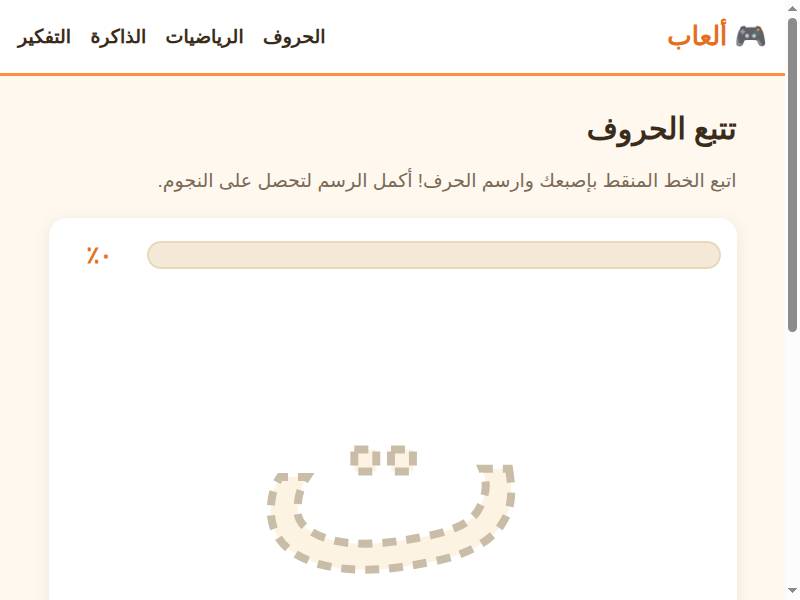
Letter Tracing is where writing begins: your child follows the glowing path of each letter with a finger or mouse, learning the stroke order by doing. The letter forms under their hand, with gentle correction when the stroke wanders — no red pen, no frustration.
More games to try
Why Arabic writing feels hard (and how games fix it)
Arabic script asks a lot of small hands. Letters change shape depending on whether they sit at the start, middle, or end of a word. The writing flows right to left. Many letters differ only by dots, placed above or below. For a child who is still learning to hold a pencil, that is a triple challenge — and worksheets that demand perfect letters on the first try make it worse.
Games change the equation by removing the fear. In Letter Tracing, the path glows, the stroke is guided, and a wobble costs nothing — the game simply invites another try. Children attempt far more repetitions in a game than any worksheet could extract, and repetition without dread is exactly how motor memory forms.
Tracing: the first step
Tracing is the bridge between recognizing a letter and writing it. Your child sees the letter, follows its path, and feels the shape through their hand. That physical feeling matters: research on early writing consistently shows that children who trace letters remember their forms better than children who only look at them.
Start with the letters your child already recognizes — tracing a familiar letter feels like success, while tracing an unknown one feels like a test. The game shows the correct stroke order with a moving guide, so good habits form from the very first stroke instead of needing correction later.
Tracing also builds the fine motor control that free writing demands. The repeated motion — starting at the right point, following the curve, lifting at the right moment — trains the hand’s muscle memory. Children who trace regularly find that when they later write freely, the letter already feels familiar in their hand, because the hand has rehearsed it dozens of times.
From tracing to free writing
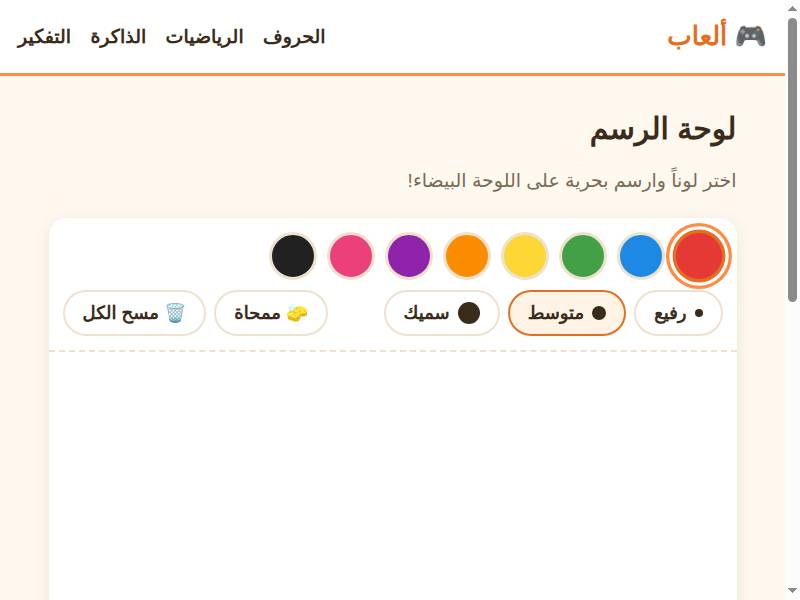
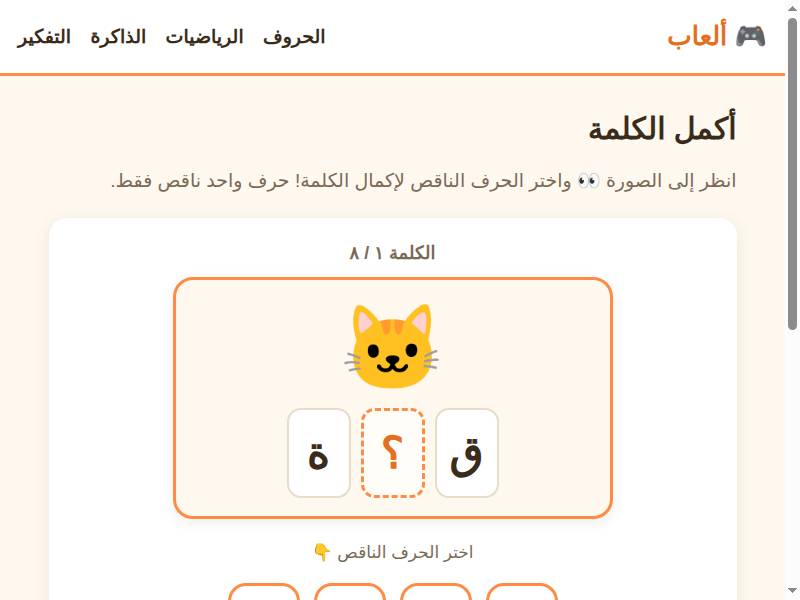
Once tracing feels easy, the training wheels come off gradually. The Drawing Board lets your child write letters freely, with no guide — just a blank canvas and their own hand. Complete the Word adds meaning: your child writes the missing letter to finish a real word, which connects the physical act of writing to reading.
The progression matters: guided tracing, then free writing, then writing inside words. Each step is small enough to feel doable, and the jump from one to the next happens naturally when your child is ready — the games never force it.
That gradual release is the whole method: support first, independence second, never the other way around.
Stroke order and letter shapes
Arabic letters are not drawn; they are written in a flowing sequence, and the order matters. Writing ب by starting at the wrong end produces a shaky, slow letter that never connects properly to its neighbors. The tracing games teach the correct starting point and direction for every letter, so the habit is right from day one.
The connected forms get special attention: the same letter looks different at the start, middle, and end of a word, and children learn those variants by tracing them in context — inside real words — rather than memorizing a chart of isolated forms.
Parents often ask whether left-handed children should trace differently — the answer is no: the stroke order stays the same, and the game guides both hands equally.
Tips for parents
First, let your child trace with a finger on a tablet before handing them a pencil — the bigger motion builds the shape in memory. Second, say the letter sound aloud as your child traces it: hearing + seeing + moving triples the memory trace. Third, when your child writes a letter freely, praise the attempt, not the accuracy — confidence is the engine. Fourth, keep a paper notebook nearby: many children spontaneously try their traced letters on paper after playing, and that transfer is the real goal.
FAQ
Q: At what age should my child start tracing Arabic letters?
A: Ages 4 to 5 is ideal for guided tracing, once your child can recognize a few letters. Younger children can start with the Drawing Board — free drawing builds the hand control that tracing later refines.
Q: Does stroke order really matter for Arabic?
A: Yes. Arabic is a connected script, and writing letters in the wrong order produces awkward, slow handwriting that doesn’t join properly. Learning the correct order from the start saves years of correction later.
Q: My child writes letters backwards. Is that a problem?
A: Not at this age — mirrored letters are a normal stage of writing development in every script. Tracing games gently correct it by showing the right direction every time, without any scolding.
Q: Should we use paper workbooks too?
A: Games build the motor memory and the habit; paper builds the transfer. A short paper session after playing — even just writing three letters — cements what the game taught. Either alone works, but together they’re stronger.
🎮 Free to play, no download needed
Play Letter Tracing now — free