Learn the Arabic Alphabet for Kids
Help your child learn the Arabic alphabet from scratch with free games: hear a letter, pop its balloon. No download, no signup. A gentle first path for ages 3–6.
⭐ Featured game: Letter Balloons
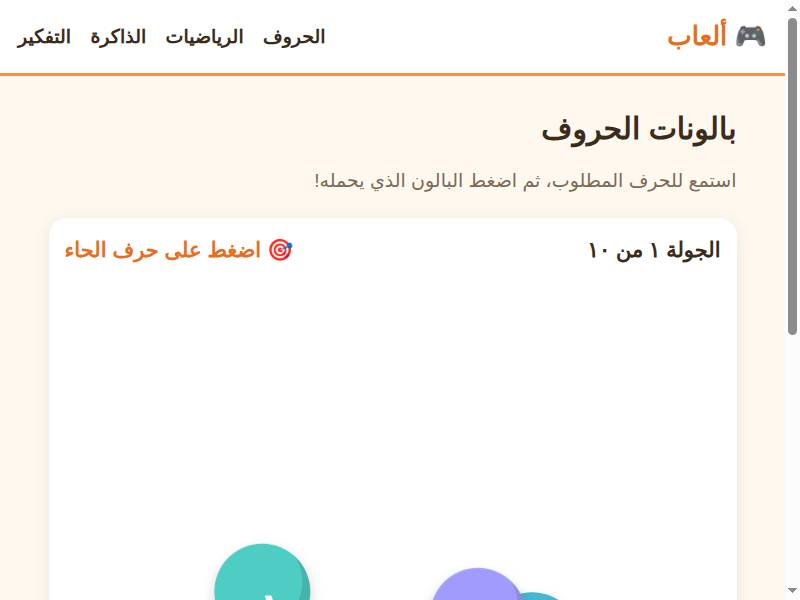
Letter Balloons is where every beginner should start: your child hears “tap the letter Baa” and pops the balloon carrying ب. No reading, no failing — just listening, looking, and the pure joy of popping.
More games to try
The right order to learn the alphabet
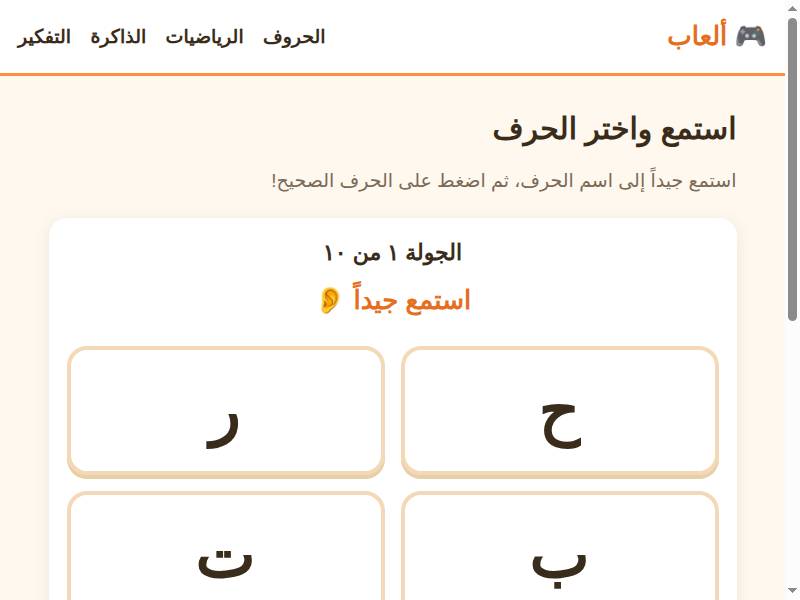
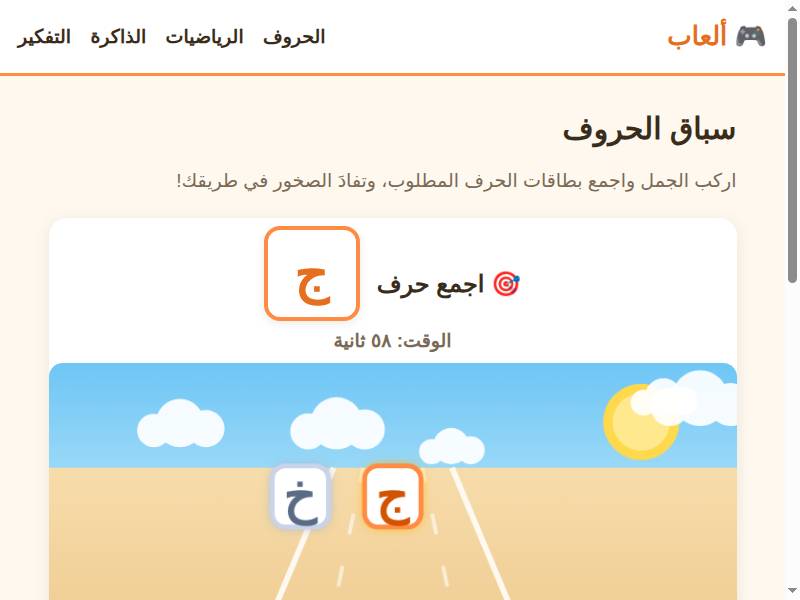
Parents often ask where to begin, and the honest answer is: with the ears, not the eyes. Step one is listening — can your child hear the difference between ب and م? Letter Balloons trains exactly this: hear the letter, find it, pop it. Step two is recognition — matching sounds to shapes at a glance, which is where Letter Runner comes in. Step three is speed and writing, through timed games and tracing.
Skip straight to an alphabet chart and you’re asking a four-year-old to memorize 28 abstract symbols; follow the ear-first path and each step feels like play, because it is.
How to start today
Open Letter Balloons in any browser — phone, tablet, or computer, nothing to install. Sit with your child for the first round and pop a few balloons together so they see how it works. Then let them play. One or two short sessions a day is plenty; the game pronounces every letter in clear Arabic, so the teaching happens even if you can’t.
After a week or two, when your child finds most letters by ear, add Listen and Pick the Letter, then Letter Runner for speed.
Why this works better than flashcards
Flashcards present one letter at a time, in silence, with a parent hovering. Games present letters the way the brain likes them: with sound, motion, color, and a reason to care. Multisensory input — hearing the letter while seeing it while reaching to tap it — builds stronger memory traces than any single channel.
And because there’s no penalty for mistakes, kids attempt far more repetitions per minute than any drill could extract. Repetition without boredom is the whole secret.
What age should we start?
Three to six is ideal, but ‘late’ is a myth. A three-year-old can start with pure listening games; a five-year-old will move faster through recognition; a seven-year-old beginner catches up in weeks because the games don’t waste time on what they already know. The only real mistake is waiting for the ‘perfect’ moment or the ‘right’ curriculum. Ten minutes of play today beats a perfect plan next month.
Tips for parents who don’t speak Arabic
You don’t need to. The games speak for you — every letter, every instruction is pronounced in clear Arabic audio. Your job is simpler: sit nearby, be delighted when they get it right, and learn alongside them. Many parents tell us they finally learned the letters themselves playing next to their kids.
If you want to help more, learn the 28 letter sounds yourself (an afternoon’s work with the games) and practice them at bedtime. Your child will think you’re a genius.
FAQ
Q: My child knows literally zero Arabic. Where do we begin?
A: Letter Balloons, today. It assumes nothing — no reading, no vocabulary, just the ability to hear and tap. It’s the gentlest possible on-ramp, and most kids are finding letters by ear within days.
Q: How long until my child knows all 28 letters?
A: With daily ten-minute sessions, most 4- to 6-year-olds recognize all 28 within 4–8 weeks. Older beginners go faster. The key variable isn’t age or talent — it’s consistency. Short daily beats long weekly, every time.
Q: My child is 8 and embarrassed they don’t know the letters. What do I do?
A: Skip anything that feels babyish and start with Letter Runner — it’s fast and game-like enough that no eight-year-old feels talked down to. Play in private, celebrate speed records, and never frame it as catching up. Within weeks the embarrassment fades because the skill is real.
Q: Do we need workbooks or a tutor alongside the games?
A: Not to start. The games cover recognition, the hardest part. Add tracing (we have a game for that) when your child wants to write, and read-aloud story time when they’re ready for words. A tutor helps later for grammar — not for the alphabet.
🎮 Free to play, no download needed
Play Letter Balloons now — free